
What could the world achieve for mangroves by 2030?
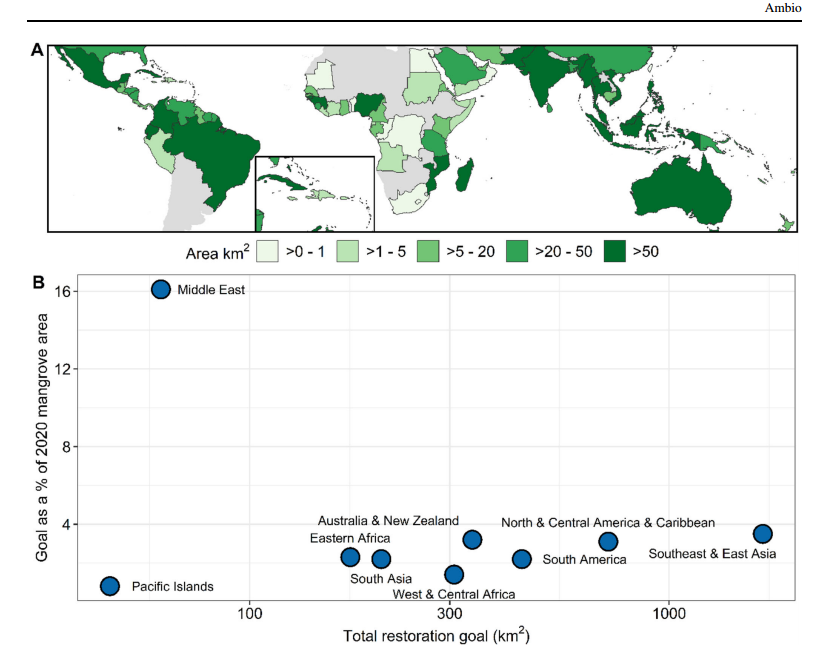
In a new paper published in Ambio, Spalding and colleagues put numbers on the Global Mangrove Alliance’s 2030 goals. Among the co-authors is Dr. Severino G. Salmo III, a faculty member at the Institute of Biology, University of the Philippines Diliman. Using global mapping data, the authors estimate how much mangrove habitat could be saved from loss, restored, and brought under effective protection if the goals are met: 1.) Prevent the loss of about 1,500 km² of mangroves by bringing losses from direct human activities close to zero; 2.) Restore about 4,000 km² of former mangrove habitat, roughly half the area identified as potentially restorable; and 3.) Bring an additional 36,000 km² under effective and equitable protection, raising total coverage to about two-thirds of the world’s mangroves.
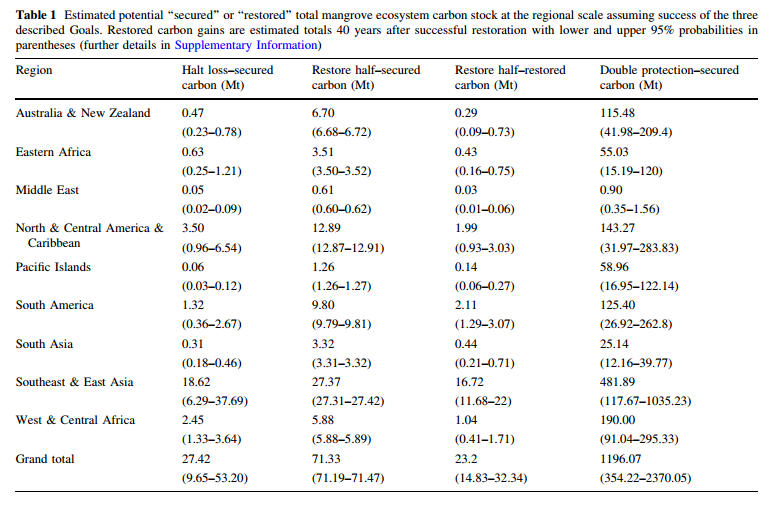
Achieving these goals could protect carbon stored in mangrove soils and trees, sustain fisheries that support coastal livelihoods, and preserve natural defenses against flooding. The authors emphasize that long-term success depends on choosing suitable restoration sites, involving local communities in decisions, and tracking whether restored and protected mangroves remain healthy over time.
Read the full paper here: https://link.springer.com/article/10.1007/s13280-026-02481-0?