


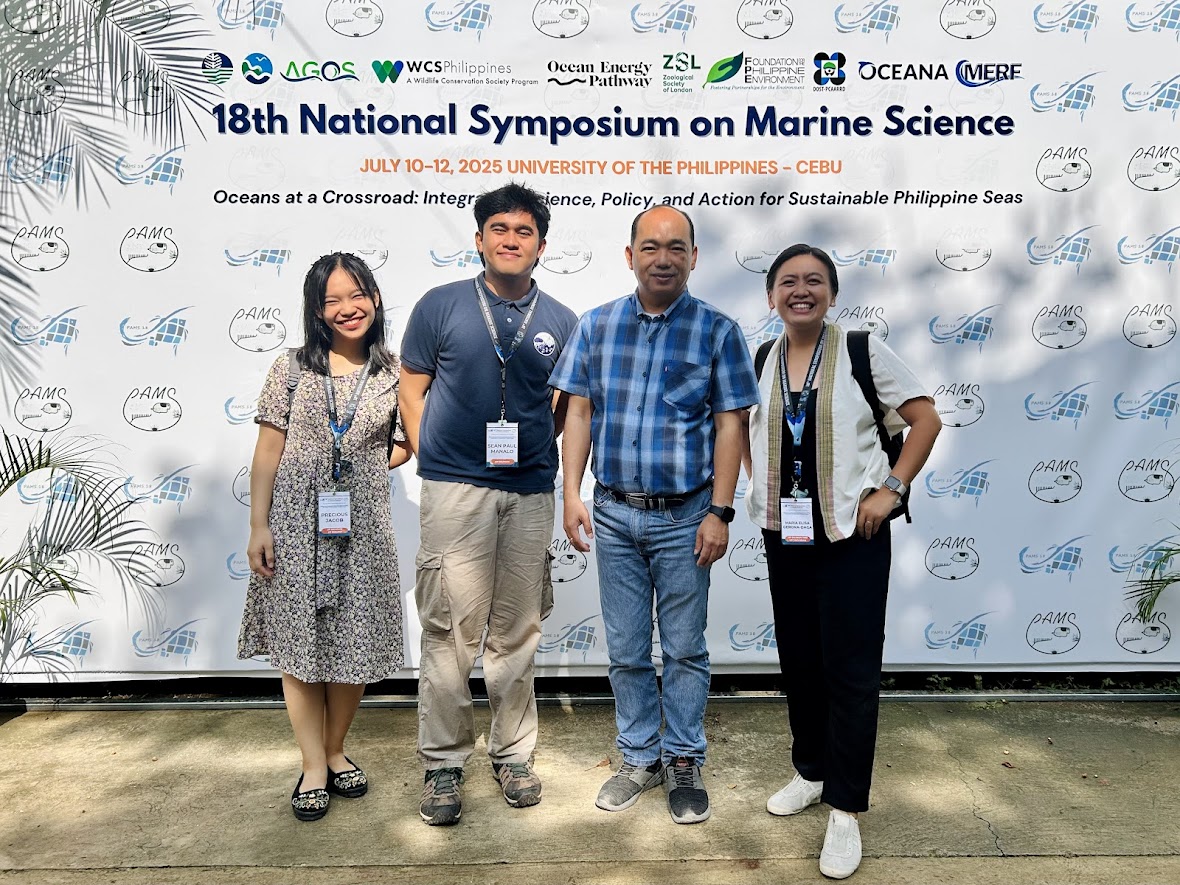
The 18th National Symposium on Marine Science (PAMS18) with the theme: “Oceans at a Crossroad: Integrating Science, Policy, and Action for Sustainable Philippine Seas” was held last July 10-12, 2025, at the University of the Philippines Cebu. It featured 8 sessions, including Special sessions on Fish and Fisheries and Blue Carbon. Dr. Salmo III and his former Ph. D. student, Dr. Gerona-Daga, presented under the Blue Carbon special session. Current research associates, Sean Manalo and Precious Jacob, also delivered oral presentations under the same session.
Here is a sneak peak of their talks:
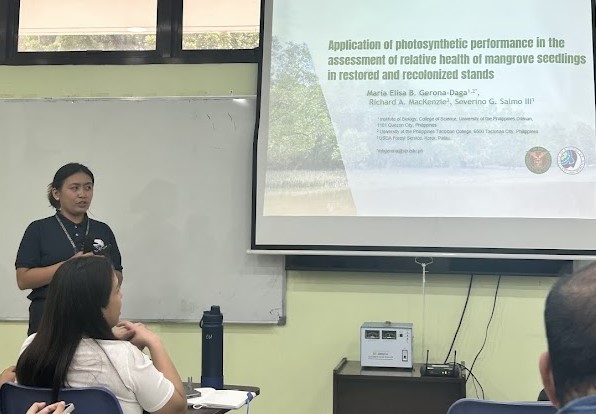
Dr. Gerona-Daga presented her study titled, “Application of photosynthetic characteristics in the assessment of relative health of mangrove seedlings in restored and recolonized stands“. Her study suggests that the photosynthetic performance of mangrove seedlings in restored and recolonized stands is lower when compared with natural stands due to residual stressors following mangrove degradation. These insights advance our understanding of the photosynthetic regulation of mangrove seedlings and their implications on restoration.

Mr. Manalo presented their study titled, “Measuring soil CO2 efflux of Sorsogon mangroves using a low-cost portable CO2 meter: Implications on Conservation and Restoration.” In this study, they measured soil CO2 efflux in natural, restored, and recolonized mangrove stands in Prieto Diaz, Sorsogon using a modified static closed chamber method (with a handheld CO2 meter). They also examined the potential ecological factors that influence efflux rates. Their findings highlight the potential of handheld CO2 meters as a rapid and inexpensive tool to assess and monitor soil carbon in community-managed mangroves and their role in CO2 emission reduction.
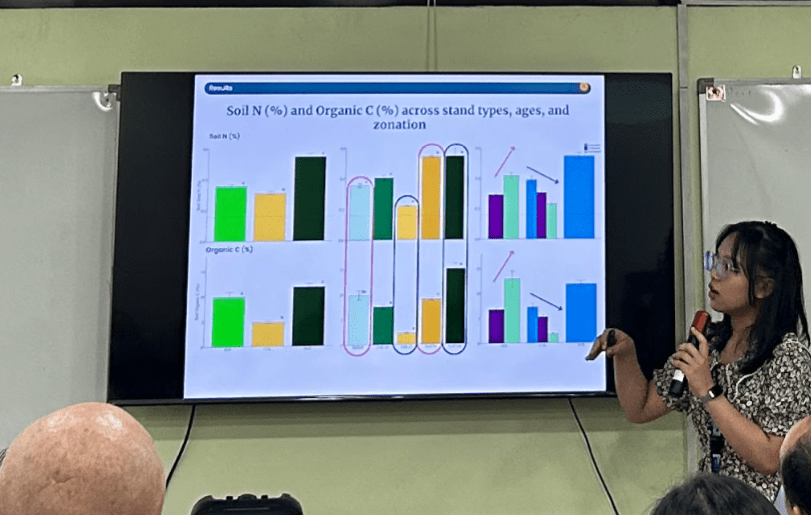
Ms. Jacob presented a study titled, “Soil Carbon and Nitrogen Stoichiometry in Different Mangrove Stands in Oriental Mindoro, Philippines: Implications on Long-Term Stability of Carbon Stock.” This study investigated the nutrient dynamics of different mangrove stands (natural, restored, and recolonized) in Oriental Mindoro, Philippines by comparing the C/N ratios across stand types. Results highlight that long-term C storage is possible for rehabilitated mangroves, but with caveats (ie., uncertain for restored stands and slow recovery for recolonized ponds). Understanding the drivers of C and N storage and uptake in mangroves is critical to understanding the relative stability and recovery of mangroves.
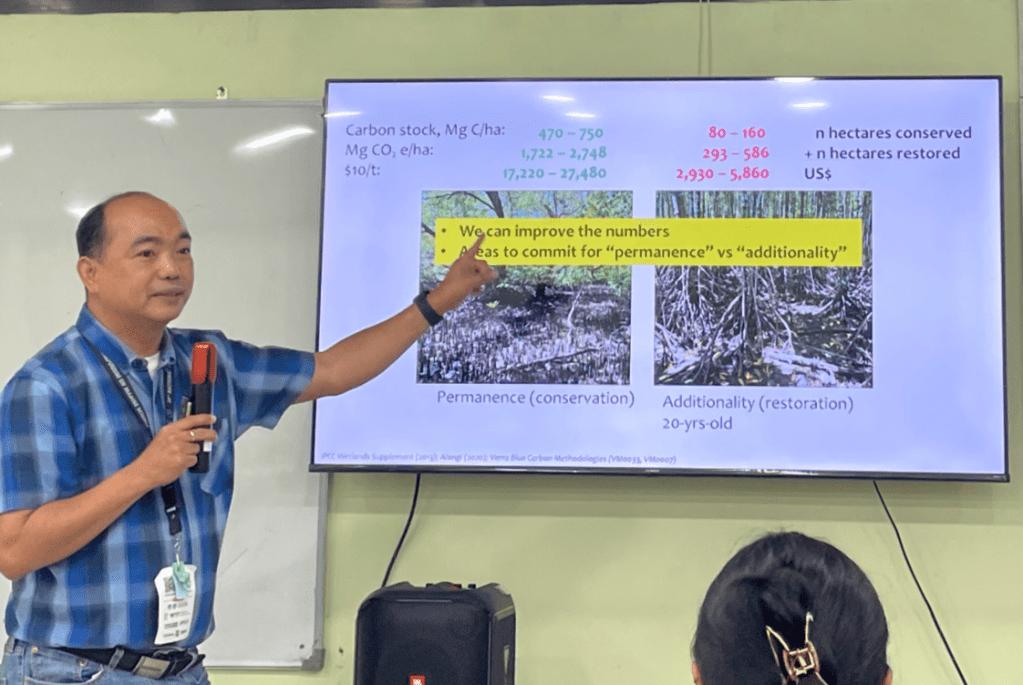
Dr. Salmo III presented a talk titled, “Mangrove Blue Carbon Roadmap and Pathway to NDC.” His talk recognized the role of mangroves as carbon sinks and called for strengthening their protection and rehabilitation in the face of climate change. He also showcased the carbon stock potential of Philippine mangroves and their role in achieving national commitments communicated to international parties.

 Mangrove Ecology