
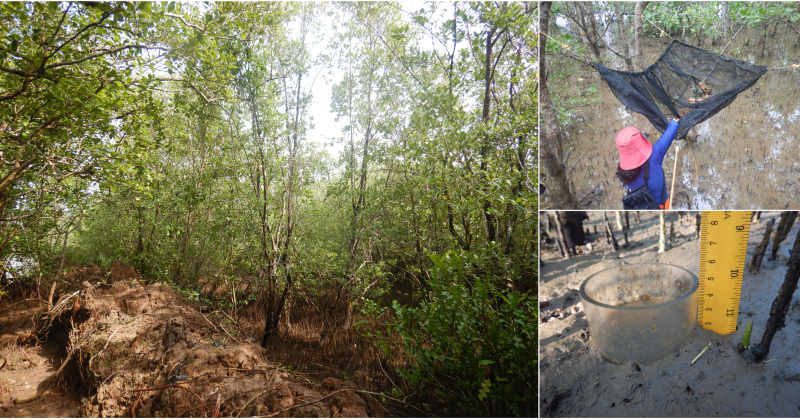

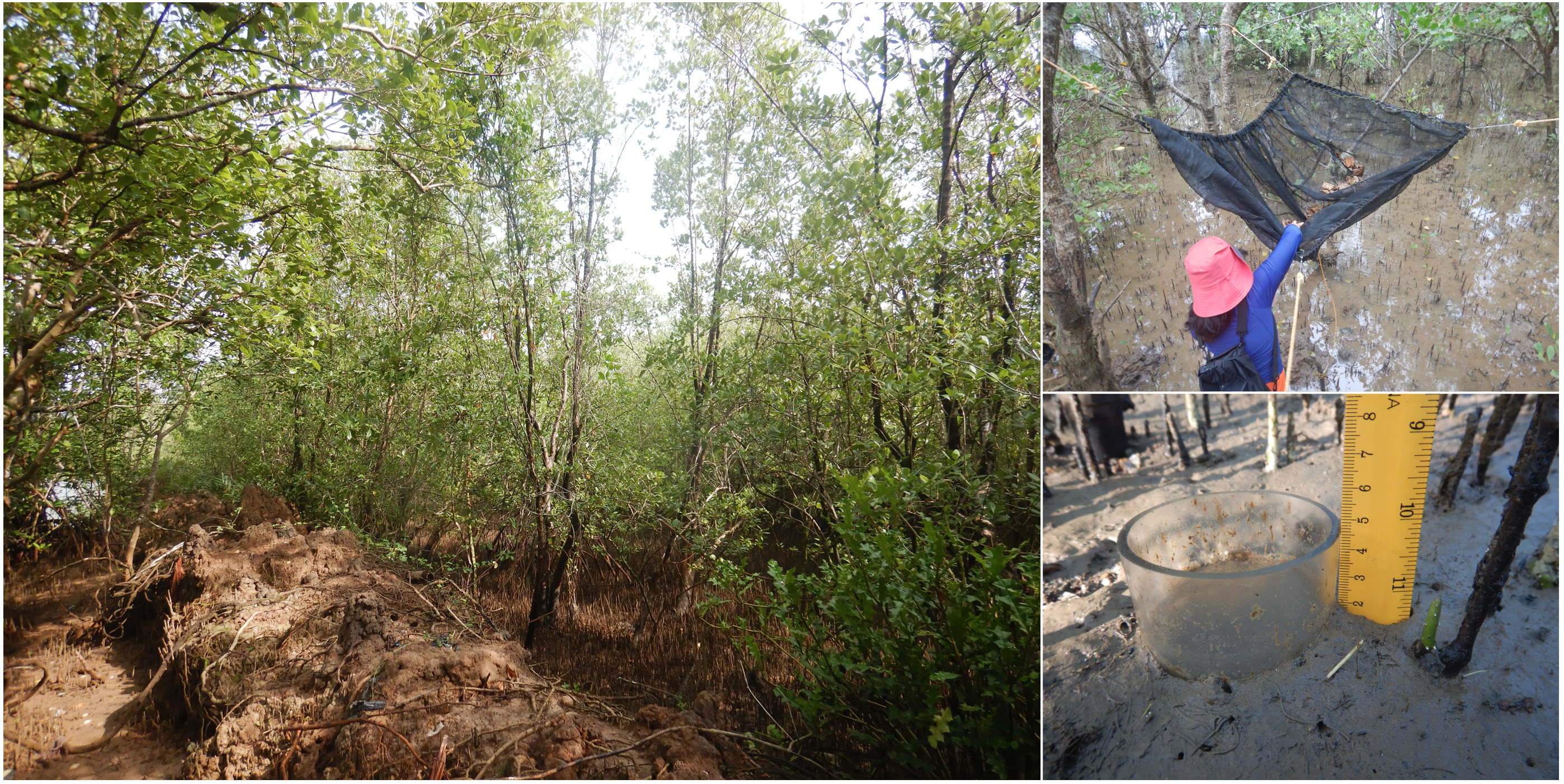
We humbly share with you another output from our PEER ManCoRe project!
Our research published in the recent issue of Estuarine, Coastal and Shelf Science (10.1016/j.ecss.2024.108963) has shed light on the intricate dynamics of mangrove ecosystems, focusing on litterfall production and decay, root biomass, and sediment accretion across different ages of restored and recolonized stands. In the Philippines, abandoned ponds are potential areas for restoration. However, massive planting projects have been implemented in coastal fringes with site-species mismatch and even planting in seagrass beds. Mangrove restoration studies worldwide are mostly focused on monitoring stand structure development, sediment recovery, and fauna secondary succession on planted versus intact forests. However, little is known in a chronosequence of restored ‘planted’ stands and naturally recolonized abandoned ponds. Our study provides insights on the dynamics of mangrove forest change over time for adaptive management strategies to enhance restoration outcomes.
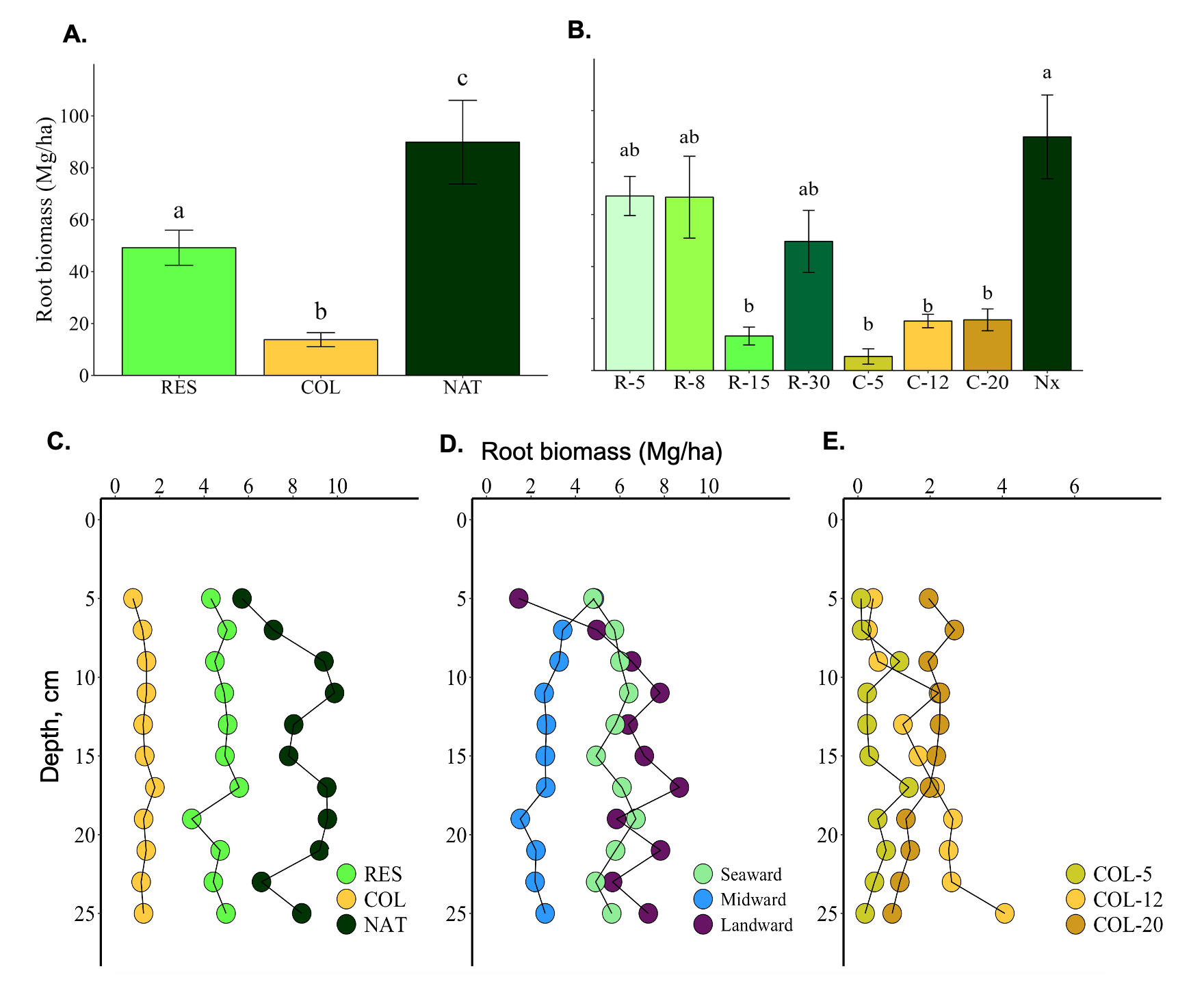
Over a 12-month period of study, we found that restored stands showed clear progression in litterfall production and decay, and root biomass with age. However, our results for the recolonized stands showed contrasting patterns for root biomass. In view of litterfall dynamics and root biomass, multi-species planting is suggested in future mangrove restoration projects to sustain the coastal food web, improve the soil nutrient pool, and enhance coastal protection.
To know more about our study, we share this personalized URL: https://authors.elsevier.com/a/1jpoW%7E1MBrIMu
This URL provides you 50 days’ free access to the article. Anyone clicking on this link before November 13, 2024 will be taken directly to the final version of the article on ScienceDirect, which you can read or download. No sign up, registration or fees are required!
 Mangrove Ecology