


Measuring soil carbon stock (SCS) is vital in assessing the role of mangroves in sequestering atmospheric carbon. SCS is estimated using a variety of methods. The Philippines, and practically most Southeast Asian (SEA) countries, measure SCS through the loss-on-ignition [LOI] method. LOI estimates soil organic matter (OM), then converted into organic carbon (OC) using a conventional conversion equation (%Corg=0.415 * % LOI+2.89, R2=0.59, n=78). The conversion equation was developed from Palau mangroves. While the LOI method provides an economical way of measuring SCS, it leads to less accurate estimates compared to costly elemental analyzers.
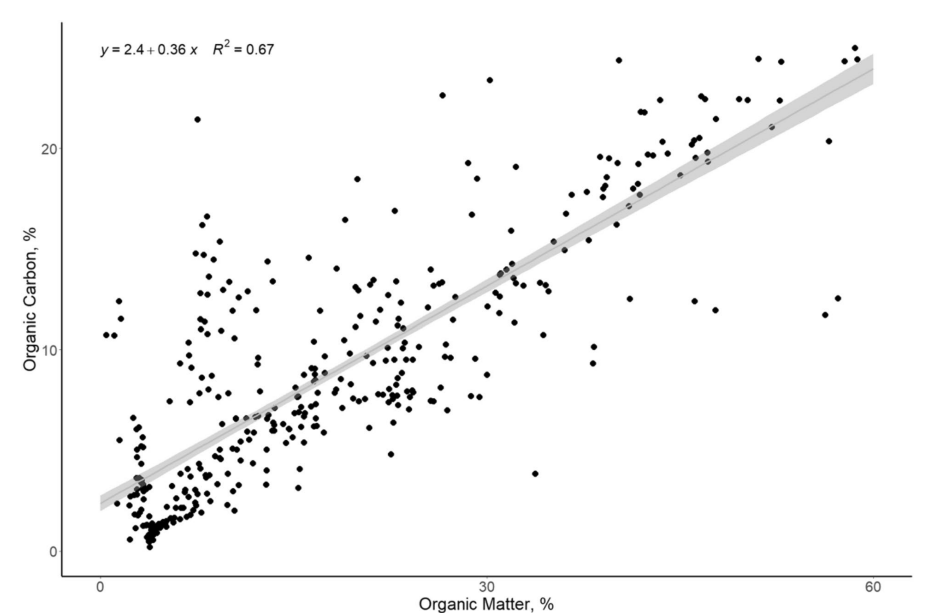
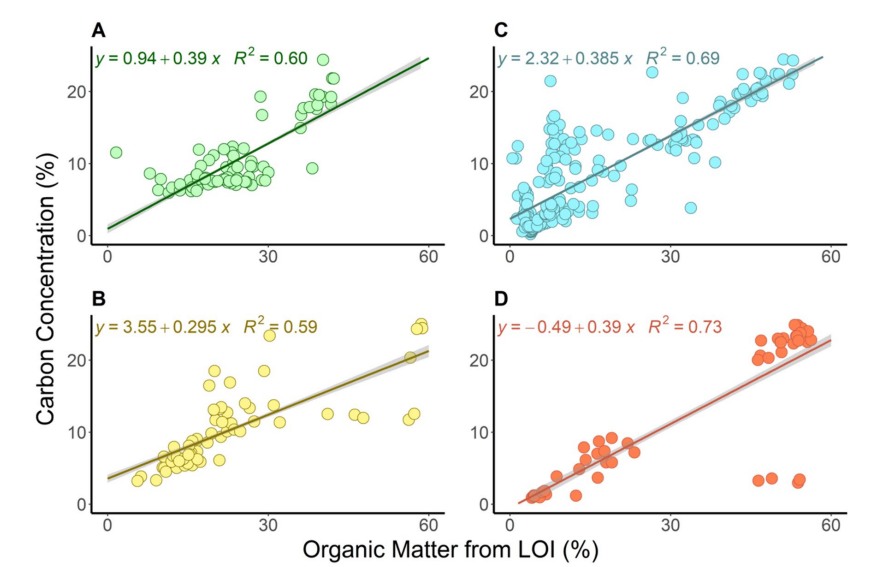
SCS is reflective of the local site conditions. However, Palau mangroves do not experience the wide range of environmental settings and disturbances faced by the Philippine mangroves. In this study, we generated a localized OM-OC conversion equation and tested its accuracy in computing SCS against the conventional equation. The localized equation was generated by plotting % OC (from elemental analyzer) against the % OM (from LOI). The OM:OC ratios were then statistically tested based on (a) stand types, (b) among natural stands, and (c) across different ages of restored and recolonized stands. Results indicate that SCS values estimated using the localized conversion equation (%OC=0.36 * % LOI+2.40, R2=0.67; n=458) and stand-specific equations were closer to the elemental analyzer readings compared to the SCS estimated using the conventional equation.
More accurate OM-OC conversion equations will lead to improved SCS estimates. Hence, our proposed equations can be used to suggest more realistic SCS targets (and therefore GHG reductions) in designing mangrove restoration programs to update the country’s Nationally Determined Contributions (NDC) under the Paris Agreement.
Read the full article titled, "Improving soil carbon estimates of Philippine mangroves using localized organic matter to organic carbon equations" published by the Carbon Balance and Management journal.
 Mangrove Ecology