


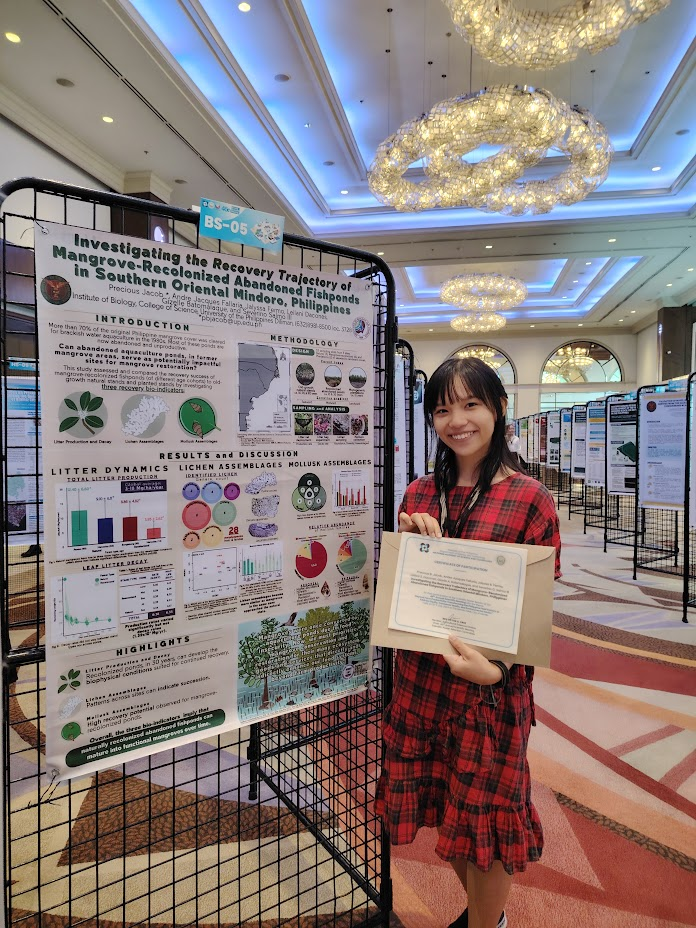
The PEER-funded integrative study titled, “Investigating the Recovery Trajectory of Mangrove-Recolonized Abandoned Fishponds in Southern Oriental Mindoro, Philippines” qualified for Poster Presentation at the 46th NAST Annual Scientific Meeting (ASM) held on July 10, 2024 – July 11, 2024, with the theme “Beyond Farm Productivity: Transforming the Philippine food system to address equity, consumer health, and environmental issues” at The Manila Hotel . The study investigated the recovery potential of mangrove-recolonized abandoned fishponds using three bio-indicators: litter production and decay, lichen assemblages, and mollusk assemblages. Overall results imply that naturally recolonized abandoned fishponds can mature into functional mangroves over time. Depending on site-specific conditions, recolonized ponds will mature slower than routine recolonized mangroves but faster than planted(monospecific) stands.
Yes, mangroves were once converted to aquaculture ponds due to food insecurity. Now, we must prioritize mangrove rehabilitation as their goods and services will, directly and indirectly, enhance our food systems beyond farm productivity. Assisting natural recolonization in abandoned ponds may be a start!
 Mangrove Ecology